Now go outside and look at the sky.
Astor House: The Battle of Shanghai
We recently explored a photo taken on Broadway, facing north with a wave of refugees running past the photographer towards the Garden Bridge.
After some further research, I'm confident that I can date that photo exactly: Saturday, 14 August 1937 - the day of the Battle of Shanghai.
What happened on this day in Shanghai is probably unique in the history of the second world war - a close-range battle involving a heavily armed cruiser and various other war ships and armored boats, aerial bombardments and dogfights, heavy use of artillery and house-to-house battle of infantry forces in the middle of a city of over three million inhabitants.
In the center of all of this action were two hotels that could not have been more exposed to all the military hardware zipping past - the Broadway Mansions and the Astor House Hotel on the north shore of Soochow Creek in the Hongkew district, just at the edge of the territory claimed by Japan with the Garden Bridge a key connection between the Japanese north of Shanghai and the international districts south of the creek.
On August 13 the National Chinese forces had begun intense bombardment of Hongkew to weaken the Japanese forces occupying the north of Shanghai with the goal to drive them out. The assault led to chaos and panic and to thousands of dead residents of the area, but did not lead to the optimistically expected Japanese retreat.
But before we continue, a look at the battlefield...
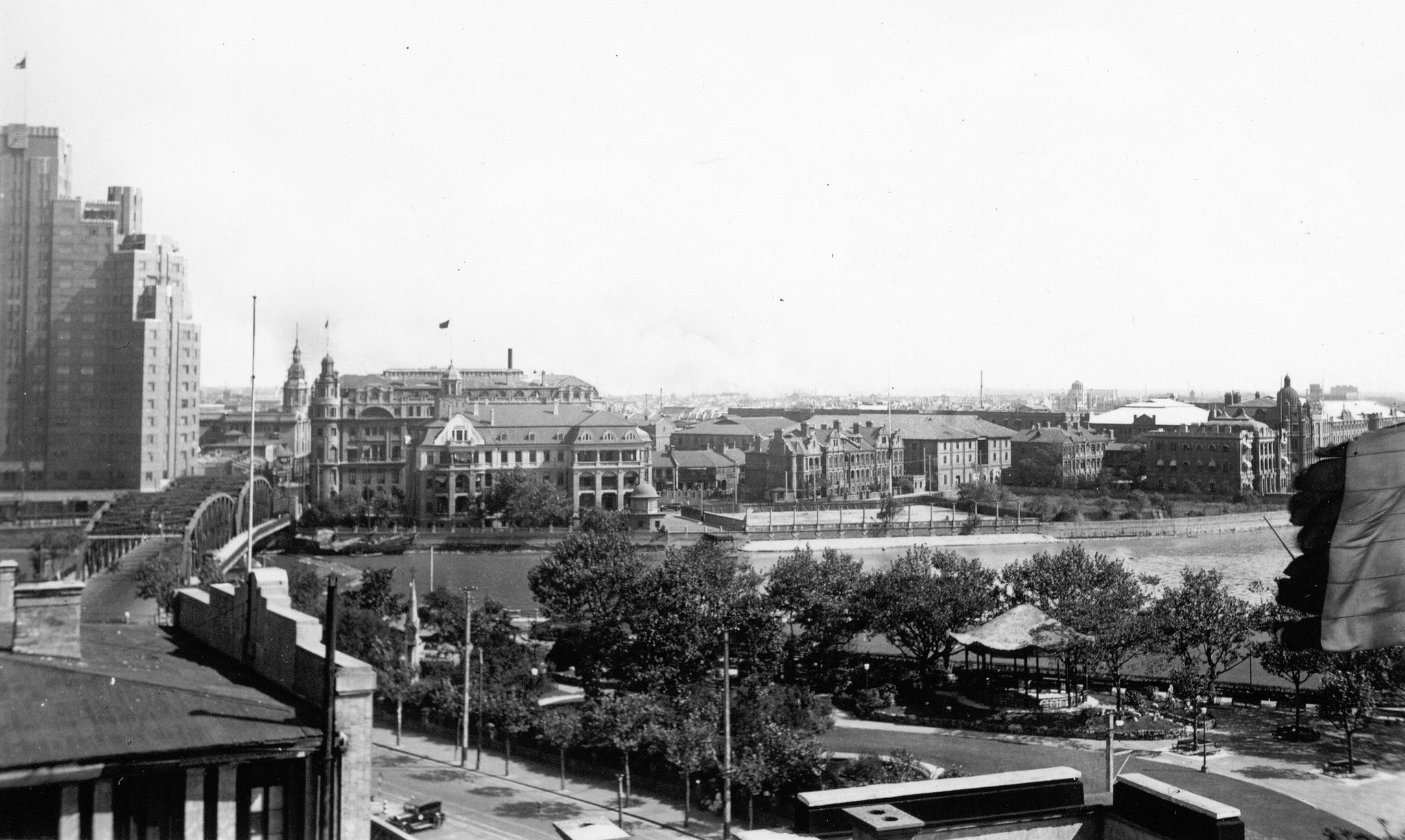
In this panorama of the north shore of Soochow Creek and its mouth into the Whanpoo river in 1936 we see on the very left the Broadway Mansions, the Garden Bridge, the Astor House partially obscured by the Soviet Consulate, then the empty plot where the German Consulate and Church stood, followed by the Japanese Consulate on the shore of the Whangpoo and on the very right a glimpse of the US Consulate building.
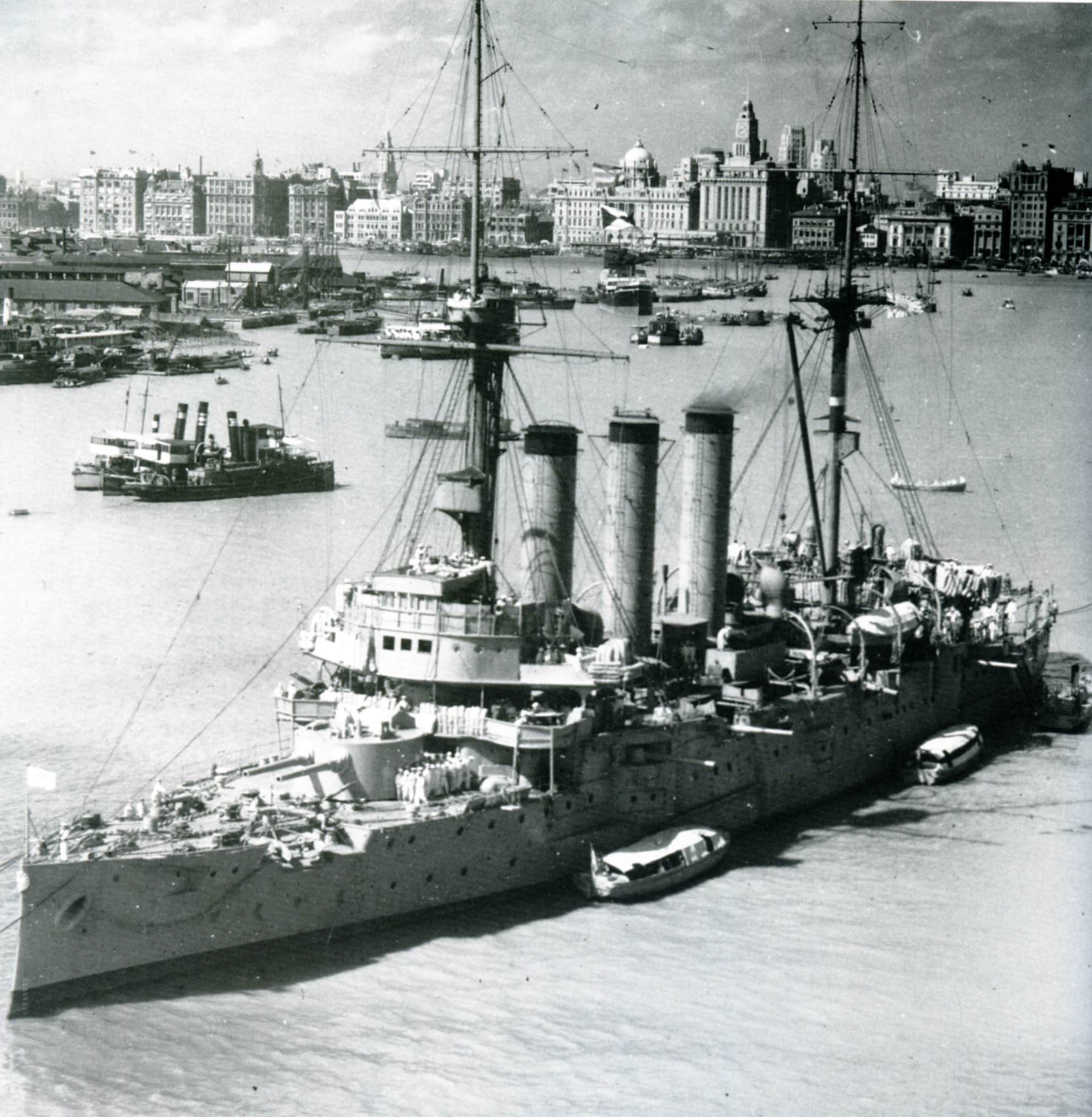
And here is a photo from earlier in 1937 of one of the main players in this story - the Japanese Cruiser Izumo, moored in the middle of the Whangpoo with a great view of the central Bund of Shanghai beyond. The Garden Bridge would be just to the right outside of this photo.
As the fighting started, the Japanese had several warships moored in the Whangpoo and they returned fire out of their main guns with well-trained crews, inflicting quite a lot of damage to the poorly trained and placed Chinese artillery. So on the 14th, the Chinese attempted to attack these ships with aerial bombardment and torpedo boats.
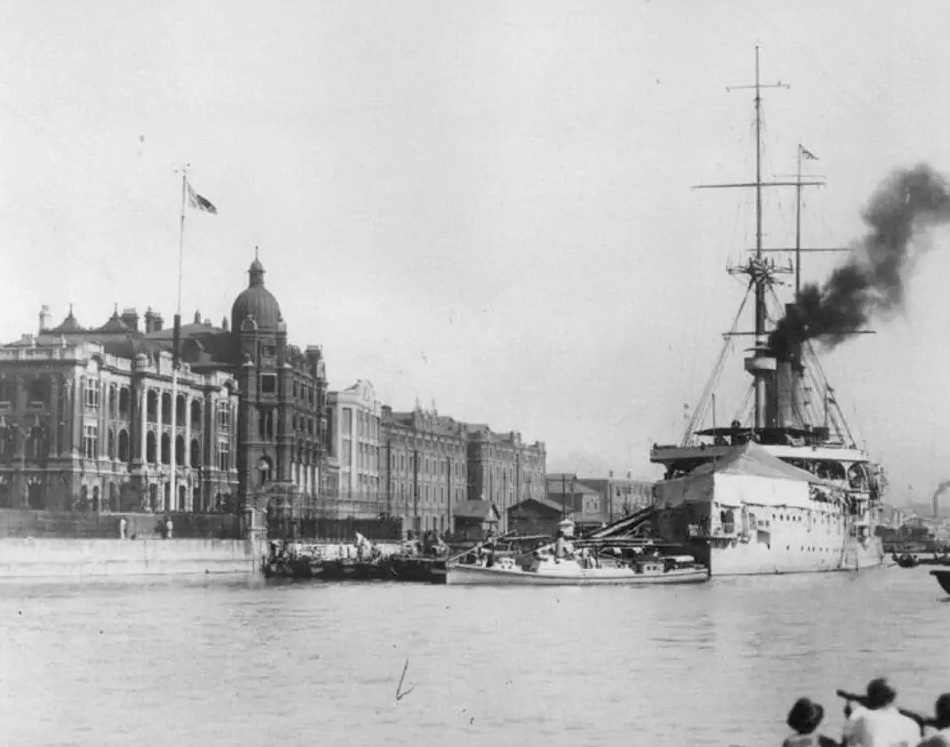
At this point, the Izumo had been docked in front of the Japanese Consulate as we can see in this picture that was taken during the battle. From the angle of the photo, the people at the bottom right here must be on a Chinese boat that took part in the assault.
Keep in mind that all of this was happening in the middle of a densely populated city that was overflowing with refugees. People were out in the open, watching aerial bombardments, anti-aircraft fire, main battle gun fire, torpedo boats and any number of infantry fire, often from only a few hundred meters away. Misplaced bombs rained down in the middle of crowded streets on several occasions during this battle, inflicting thousands of dead and injured among the mostly Chinese population across the city.
At one point a gun boat launched torpedoes that missed the Izumo and exploded along the embankment at the mouth of Soochow Creek just next to the Soviet Consulate, breaking windows in the Astor House's front facade - one of the very few hotels in the world that ever sustained torpedo damage, I'm sure.
We have some remarkable eye witness reports from this day and I can only urge you to read both of these. The first is a diary entry by Vladimor Jiganoff quoted in the great blog about Shanghai's Russian history by Katya Knyazeva, which is also where I found that third photo of the Izumo in this post.
The second report is a New York Times article about the battle from August 18, 1937. Click for a larger version:
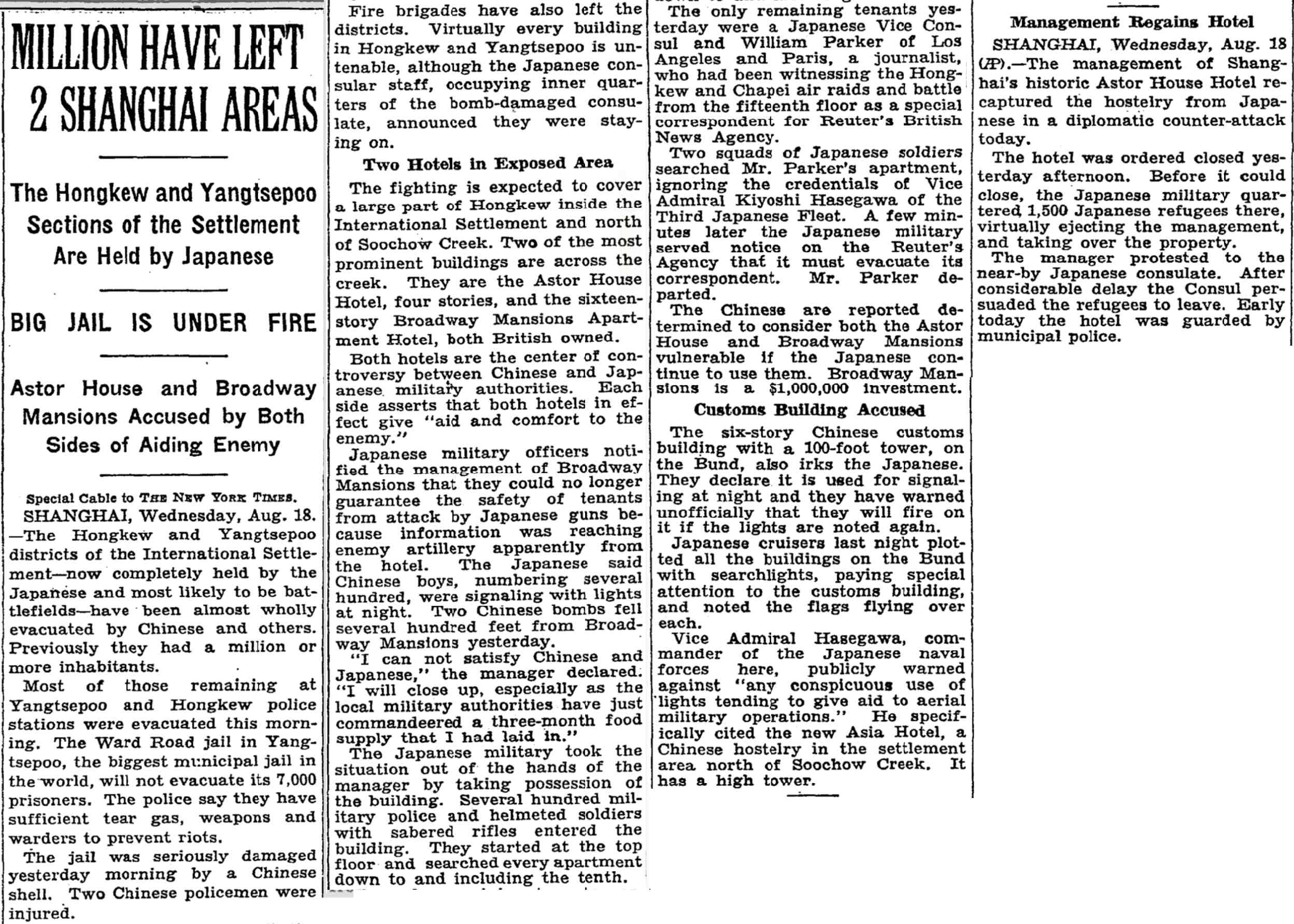
The subhead "Astor House and Broadway Mansions Accused by Both Sides of Aiding Enemy" gives an idea of how fraught with danger the situation for the two hotels must have been during these days.
Here are more photos from Karl Kengelbacher, who took pictures of the battles through all four months of the fighting. Content warning on this link - Mr. Kengelbacher did document some of the victims of the aerial bombardments in his photos.